Six areas to review when your salon business feels harder than it should
SIX AREAS TO REVIEW IN YOUR SALON BUSINESS
Keeping the salon financially worthwhile, supporting the team and attracting suitable customers all need attention. When those things feel harder, it can help to step back and look at how you are approaching the business.

The six areas below give you somewhere to start. You do not need to change everything at once. Choose the situation you recognise and look at what needs attention.


WHEN THE SAME PROBLEMS KEEP COMING BACK
You can be working hard to keep everything moving and still feel as though you are covering the same ground. More hours or another quick fix may help today without changing what happens next week.
Give yourself some space to look at the relationship you have with the business, the questions you are asking and the structures the team rely on. Those are the areas we will explore here.
#1 LOOK AT THE RELATIONSHIP YOU HAVE WITH THE BUSINESS
Yes, you read that right..the relationship.
Just like we are in a relationship with a partner, our friends and families we are in a relationship with other elements of life.
For instance, money, food and our home…
And yes we don’t really look at our business and the relationship we have with it clearly enough.
When you have put so much into the business, it can be difficult to step back and look honestly at what is happening.
Frantically sticking tape over holes in the bucket.
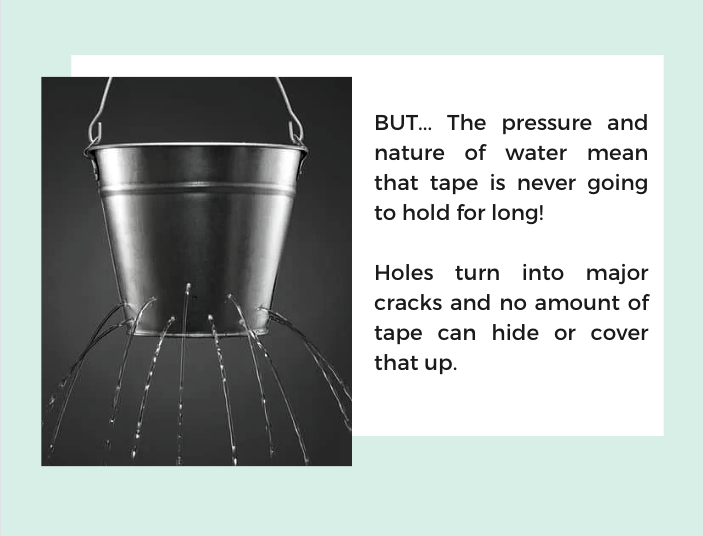
BUT… The pressure and nature of water mean that tape is never going to hold for long!
A change in staffing, costs or product supply can expose a gap that was easier to work around before. The issue may have grown, or the way you used to handle it may no longer fit.
Things get very real very quickly in a crisis though.
Holes turn into major cracks and no amount of tape can hide or cover that up.
The way you think about the business can influence your decisions. If you feel it needs you at every moment, for example, you may keep cancelling time you had planned for something else. Looking at that pattern gives you a decision to explore.
All relationships need boundaries. Successful salons have very clear boundaries.
How are you doing with boundaries in your leadership relationship?
It is worth looking at what you have agreed, what keeps being left unclear and where a boundary would help.
This leads to the next common mistake…
#2 NOT ASKING QUALITY QUESTIONS
The questions you ask can change what you notice and which options you consider.
A different question can help you notice something you had been overlooking.
The questions we ask are powerful, for better or for worse.
Questions direct focus, energy, and intention.
For example, “Why can’t the team get this right?” starts with a judgement. “What happened the last time we tried this?” makes room for a more specific answer. You may discover a missing explanation, a step that needs practice or an agreement that has not been followed. Those need different responses.
WHAT WOULD HELP YOU UNDERSTAND THE SITUATION MORE CLEARLY?
Have you taken the time away from the front line to reassess, regroup and ask yourself quality questions about what you really need to do in your business to have a successful salon?
Ask questions that help you understand what happened and what could change. “What keeps happening?” or “What was agreed?” may be more useful than repeatedly asking yourself why you cannot get it right.
Look for what you can understand or influence, while being honest about the parts that are outside your control.
How can we change our habit of questioning?
By first being aware of what empowering questions are. Empowering questions are:
- Open-ended.
- Clear and concise.
- Draw on deeper thinking as opposed to shallow thinking.
- Come from a place of genuine curiosity.
- Asked with a beginner’s mind.
- Use positive language and don’t come from poor underlying assumptions.
Far too many salon owners are trapped spending time working in their business and doing things the same way out of habit. Despite everything changing around them.
This brings me to the next big mistake….
#3 UNDERSTAND WHAT MAKES A CHANGE DIFFICULT
You might enjoy trying a new styling product and still hesitate over changing the salon’s booking system. Those changes ask very different things of you and the team.
Before changing the system, you would need to understand what it involves, what it helps with and how the team would learn to use it.
Hesitation can give you useful information. It may be uncertainty, lack of time or a real concern about the change, rather than resistance for its own sake.
To weigh up a possible change, look at:

- Dissatisfaction with the way things are now
- A positive vision of the future
- Concrete steps to make the vision a reality
What can you do differently to improve upon the relationship you have with your business?
Faced with tough times people often just dig in and keep carrying on exactly the same despite things falling down around them.
I wrote a great resource blog HERE with easy steps to help with this.
Wanting a different result and changing an everyday habit are not the same thing. Make the next step clear enough to practise.
As an Empowered Salon Leader envisioning your successful salon, it’s your CEO’s role to facilitate change for you and your team.
But is it easy to re-envision your future when the one you planned isn’t quite working out?
A booking-system change, for example, may need time to move information, learn new steps and support the team. A better future does not remove that work. Allowing for it makes the decision more realistic.
Changing things can feel difficult when you are right in the middle of the problem. Give yourself room to look at what happened, what you know and what you might be assuming.
You can feel strongly about a situation and still make a considered decision. Hearing another view or checking the information may help you see a next step you had missed.

What are you unsure about, and what would you need to know or have in place before going ahead?
The best tool I have to keep emotions in check when doing this and help me make decisions based on facts, data and logic are my structures and frameworks.
Why? Because a clear record gives you something to check together. The information can still be incomplete or misunderstood, so check what it actually shows before deciding.
A considered decision to keep something that works is different from avoiding an issue that keeps returning.
#4 NOT READING THE ROOM
Good-intentioned connection and communication are the salon owner’s responsibility to get right. for a salon business to be a truly successful salon.
Honest, transparent straightforward, it’s easy, right?
But are you like the rest of us and perfect connection and communication with every customer, partner, inlaw and friend is not your reality?
Connecting and having problem-free communication is key… but we all muck it up, don’t we?
What one person understands from a conversation may differ from what you intended. Ask them to explain it back in their own words, and listen for the part that still needs discussion.
With our teams for example we need to be very aware of how we communicate and connect with them so we are helping to empower and nurture them to success, continue building relationships and encourage them to see a future within our business.
Ask what your team need to understand, learn or discuss, rather than assuming the same explanation will work for everyone.
Structure within communication gives consistency.
It connects them to what is going on and how everything they do affects everyone else.
A shared way of working can help you explain expectations consistently and discuss what happened. It does not remove emotion or guarantee that a decision is fair, so leave room for questions and another point of view.
#5 HIRING FROM A PLACE OF DESPERATION AND LIMITATION.

If your goal involves employing or growing a team, hiring deserves preparation as well as an interview.
But if all it took was an interview and a job description to help ease the stress and overwhelm you are under, then all the salons that hired people to support them would be successful salons and we know that’s not how it always works out.
In fact, it causes your business to go backwards when hiring goes wrong.
I have some great hiring and onboarding tips for successful salons here
HIRING AND FIRING
#6. MAKE THE WAY WORK IS ORGANISED SUPPORT THE WEEK YOU WANT
Does the same work keep returning to you?
Its easy to think to have a successful salon you need to be there doing All . The . Things!!
BUT… Micromanaging your salon means slamming into the day-to-day, reacting to issues, overwhelm and frustration.
You may think that you are structured in the way you manage your business and not micromanaging.
But this is the key word here…MANAGE.
You may still need to manage parts of the salon yourself. Look for one task the team could do with clearer guidance and practice, rather than assuming you can simply stop managing.
But here’s the truth
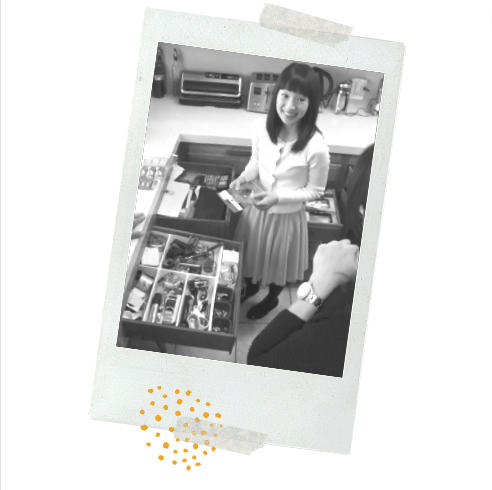
Structure is like the Marie Kondo effect in your business.
Structure is a way to make the work and the next decision clearer. A written procedure may need updating, but it may also need showing, practising or discussing before someone can use it well.
If your business doesn’t rely on structure it relies on you.
That is a good reason to look at one repeated task and decide what would help someone else do it reliably.
For a closer look at choosing one repeated task and helping someone else do it reliably, read Managing Your Salon Successfully: The Marie Kondo Effect.